
Things You Should Never Do to Your Dog: 12 Common Mistakes to Avoid
Taking care of a dog involves much more than providing food and water. Dogs need proper care, exercise, training, attention, and a safe environment to stay healthy and happy. While most dog owners want the best for their pets, some common habits and mistakes can negatively affect a dog’s health, behavior, and relationship with its owner.
Understanding things you should never do to your dog is an important part of responsible pet ownership. By avoiding harmful practices and learning better alternatives, you can help your dog feel safer, healthier, and more comfortable.
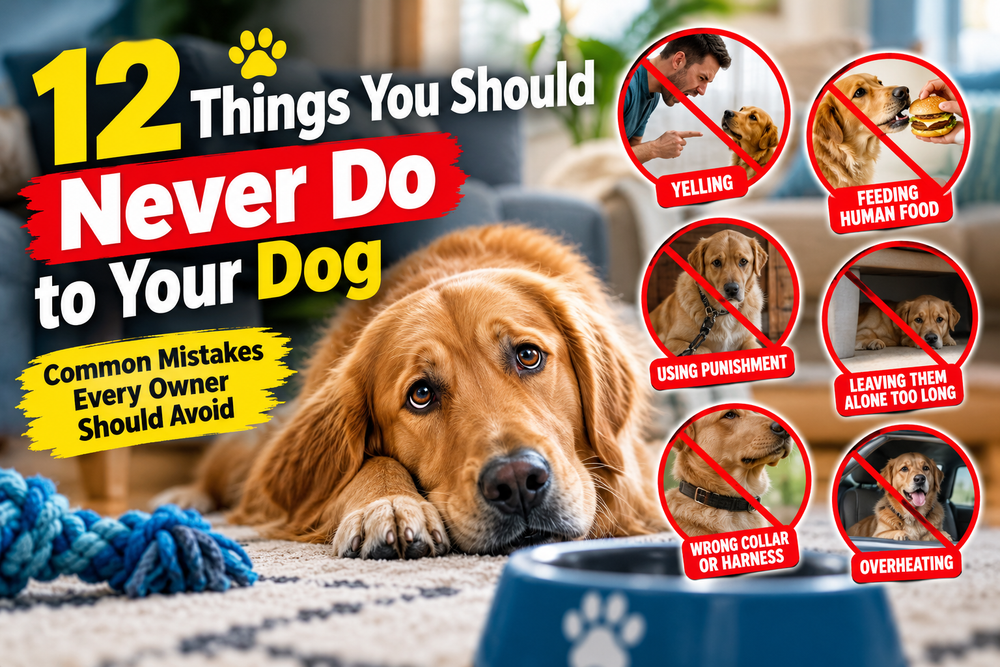
Here are 12 common mistakes every dog owner should know about.
1. Never Hit or Physically Punish Your Dog
One of the most important rules of responsible dog training is to avoid physical punishment.
Hitting, kicking, pushing, or deliberately frightening a dog does not teach it what you want it to do. Instead, physical punishment can create fear, stress, anxiety, and defensive behavior.
Dogs learn more effectively when good behavior is rewarded. Positive reinforcement dog training, using praise, appropriate treats, toys, or attention, can help your dog understand which behaviors are desirable.
If your dog makes a mistake, focus on calmly redirecting its behavior rather than using violence.
2. Do Not Ignore Your Dog’s Exercise Needs
Dogs need regular physical activity, although the amount varies according to their age, size, breed, and health.
A lack of exercise can contribute to boredom, destructive behavior, restlessness, and weight problems. Some dogs may start chewing furniture, barking excessively, or trying to escape simply because they are not receiving enough mental and physical stimulation.
Regular walks, interactive play, and age-appropriate activities are essential parts of good dog care.
3. Never Leave Your Dog in a Hot Car
Leaving a dog inside a parked car can become extremely dangerous, even when the weather does not seem particularly hot.
Temperatures inside vehicles can rise rapidly, creating a potentially life-threatening situation. A cracked window does not necessarily make a parked car safe for a dog.
If you cannot take your dog with you safely, it is better to leave the pet at home in a comfortable environment with access to fresh water.
4. Do Not Force Your Dog to Interact With People or Other Dogs
Not every dog enjoys meeting strangers or playing with every other dog.
If your dog appears nervous, frightened, or uncomfortable, forcing an interaction can increase stress and may make future encounters more difficult.
Pay attention to dog body language. Signs such as hiding, backing away, excessive lip licking, yawning, stiff posture, growling, or attempting to escape may indicate that your dog needs more space.
Respecting your dog’s boundaries is an important part of responsible dog behavior management.
5. Never Ignore Your Dog’s Health Problems
Dogs cannot explain when something is wrong, so owners need to pay attention to changes in behavior and physical condition.
A sudden loss of appetite, unusual tiredness, persistent coughing, vomiting, diarrhea, difficulty breathing, limping, or significant changes in behavior can be signs that your dog needs professional attention.
Do not assume that every health problem will disappear on its own. When you are concerned about your dog’s health, contact a qualified veterinarian for appropriate advice.
Regular veterinary checkups are also an important part of long-term dog health and wellness.
6. Do Not Give Your Dog Unsafe Human Foods
Some foods that are perfectly normal for humans can be harmful or dangerous to dogs.
Examples include chocolate, grapes and raisins, onions, garlic, alcohol, and products containing xylitol. Other foods can also cause problems depending on the amount consumed and the individual dog.
Instead of sharing random table scraps, provide food and treats that are specifically appropriate for dogs.
If your dog accidentally consumes something potentially toxic, contact a veterinarian or an appropriate animal poison service as quickly as possible.
7. Never Skip Basic Grooming
Grooming is not simply about making your dog look clean. It can also be an important part of pet health care.
Depending on the breed and coat type, dogs may need regular brushing, bathing, nail care, ear cleaning, and dental care.
Long or tangled coats can become uncomfortable, while overgrown nails may affect the way a dog walks. Poor dental hygiene can also contribute to oral health problems.
Your dog’s grooming requirements depend on its individual needs, so establish a routine that is appropriate for your pet.
8. Do Not Expect Your Dog to Understand Human Language Automatically
Dogs can learn many words and commands, but they do not automatically understand long explanations or complicated instructions.
If you constantly change the words you use for the same command, your dog may become confused.
For effective dog training, use short, consistent commands and reward your dog when it responds correctly. Patience and repetition are usually more effective than frustration or shouting.
9. Never Use Your Dog’s Crate as a Place for Punishment
A crate can be a useful training and management tool when introduced properly. However, turning it into a place of punishment can create negative associations.
Your dog should ideally see its crate as a safe and comfortable place to rest.
If you use crate training, make sure the crate is appropriately sized, comfortable, and introduced gradually. Dogs should not be confined for excessive periods without appropriate breaks and care.
10. Do Not Neglect Mental Stimulation
Physical exercise is important, but dogs also need mental stimulation.
Boredom can contribute to unwanted behaviors such as excessive barking, digging, chewing, or destructive activity.
Puzzle toys, scent games, basic obedience training, interactive play, and supervised exploration can give your dog opportunities to use its brain.
Mental stimulation is particularly valuable for intelligent or highly active dogs.
11. Never Encourage Aggressive Behavior for Entertainment
Some owners may find it amusing when a dog growls, chases people, or behaves aggressively. Encouraging these behaviors can become a serious mistake.
A behavior that appears funny when a dog is young can become dangerous as the dog becomes stronger and more confident.
Responsible dog ownership means teaching your pet appropriate behavior and preventing situations that could lead to injury.
If your dog shows persistent aggression or serious behavioral problems, seek help from a qualified veterinary behavior professional or experienced positive-reinforcement trainer.
12. Do Not Ignore Your Dog’s Emotional Needs
Dogs are social animals, and many need regular interaction with their human family.
Providing food and shelter is not enough. Dogs also need attention, companionship, play, training, and a sense of security.
Ignoring a dog for long periods or constantly isolating it can contribute to boredom and stress.
Spend quality time with your dog every day. Even simple activities such as walking together, playing, grooming, or calmly sitting nearby can strengthen the bond between you and your pet.
Why Avoiding These Mistakes Matters
Good dog care is about preventing problems before they happen. Many unwanted behaviors and health concerns can be reduced when owners understand their dog’s physical and emotional needs.
A healthy relationship with a dog should be based on trust, consistency, patience, and positive communication. Instead of asking, “How can I make my dog obey me?” it can be more helpful to ask, “How can I teach my dog what I expect?”
This change in approach can make dog training more effective and improve the relationship between the dog and its owner.
How to Be a Better Dog Owner
Being a responsible dog owner does not mean being perfect. It means being willing to learn and improve.
Make sure your dog receives appropriate nutrition, regular exercise, veterinary care, grooming, training, mental stimulation, and plenty of positive interaction.
Learn to recognize your dog’s body language and respect its limits. When your dog behaves appropriately, reinforce that behavior with praise, attention, play, or suitable rewards.
Most importantly, never use fear or violence as a substitute for proper training.
Final Thoughts
Knowing what not to do with your dog is just as important as knowing what you should do. Avoid physical punishment, unsafe foods, excessive isolation, inadequate exercise, forced interactions, and neglecting health or emotional needs.
Every dog is different, and responsible dog ownership requires patience and attention to the individual animal. By using positive reinforcement, providing proper care, and respecting your dog’s physical and emotional needs, you can create a safer and stronger relationship.
A happy dog is not simply a dog that obeys commands. A happy dog is one that feels safe, receives appropriate care, has opportunities to exercise and explore, and knows that its human companion can be trusted.