

When Should You Take Your Dog to the Vet? 10 Warning Signs Every Owner Should Know
Dogs are experts at hiding discomfort. Unlike humans, they cannot tell us when something hurts or explain what they are feeling. That is why responsible dog ownership involves paying close attention to changes in behavior, appetite, energy, and appearance. Sometimes a small change may be temporary, while other symptoms can indicate that your dog needs professional veterinary attention.
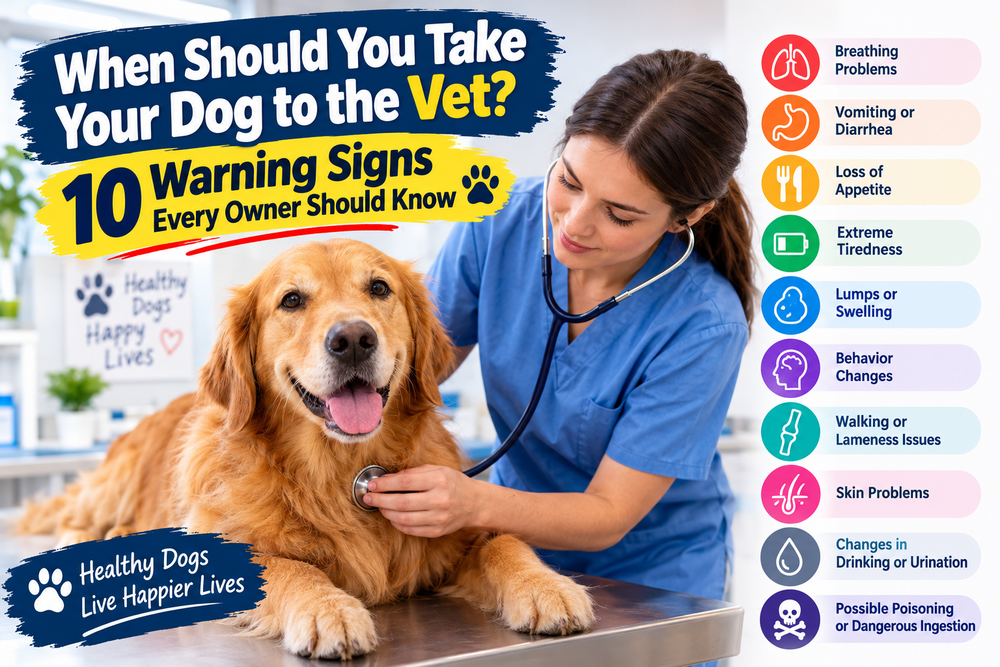
Knowing when to contact a veterinarian can help you respond quickly and potentially prevent a minor problem from becoming more serious. Below are ten warning signs every dog owner should know.
1. Difficulty Breathing
Breathing problems should always be taken seriously. If your dog is breathing unusually fast, struggling to breathe, coughing continuously, making abnormal breathing sounds, or showing obvious difficulty getting enough air, contact a veterinarian promptly.
Severe breathing difficulty can require emergency care, especially if your dog has pale, blue, gray, or unusual-looking gums or appears extremely weak.
2. Persistent Vomiting or Diarrhea
Occasional stomach upset can happen to dogs, particularly if they have eaten something unusual. However, repeated vomiting or diarrhea should not simply be ignored.
Contact your veterinarian if the symptoms continue, become severe, contain blood, or are accompanied by weakness, dehydration, loss of appetite, or unusual behavior. Puppies, senior dogs, and dogs with existing health problems may need particular attention because they can become dehydrated more quickly.
3. Sudden Loss of Appetite
A dog skipping one meal does not necessarily mean something is seriously wrong. However, a noticeable or persistent loss of appetite can be a sign that your dog is not feeling well.
Pay attention to other symptoms, such as vomiting, diarrhea, lethargy, abdominal discomfort, weight loss, or changes in drinking habits. If your dog refuses food for an unusually long period or seems unwell, speak with your veterinarian for appropriate advice.
4. Extreme Tiredness or Weakness
Dogs naturally have periods when they want to rest, especially after exercise. But sudden or unusual lethargy is different.
If your normally active dog becomes unusually weak, struggles to stand, does not want to move, or seems difficult to wake, it is important to contact a veterinarian. Sudden changes in energy can have many possible causes, so professional evaluation is often the safest approach.
5. Unusual Lumps, Swelling, or Changes on the Body
Regularly checking your dog’s body can help you notice changes early. While many lumps are harmless, a new lump, rapidly growing swelling, painful area, or unusual skin change should be evaluated by a veterinarian.
Avoid trying to diagnose a lump yourself. A veterinarian can examine it and determine whether further testing is appropriate.
6. Sudden Changes in Behavior
You know your dog’s normal personality better than anyone. If your friendly dog suddenly becomes aggressive, withdrawn, unusually anxious, confused, or reluctant to interact, something may be wrong.
Behavioral changes can sometimes be associated with pain, illness, stress, or other underlying issues. If the change is sudden or persistent, a veterinary examination can help identify the possible cause.
7. Difficulty Walking or Sudden Lameness
A dog that suddenly refuses to put weight on a leg, has difficulty standing, limps severely, or appears to be in pain should be assessed by a veterinarian.
Do not force your dog to exercise when it is showing signs of pain. Keep activity limited and seek professional guidance, particularly if the problem appeared suddenly or followed an injury.
8. Excessive Scratching, Hair Loss, or Skin Problems
Occasional scratching is normal, but constant itching can become a significant problem. Excessive scratching, licking, chewing of the skin, redness, sores, unpleasant odors, or unusual hair loss may indicate allergies, parasites, infections, or other skin conditions.
A veterinarian can help determine the underlying cause and recommend an appropriate treatment instead of relying on random products that may not be suitable for your dog.
9. Changes in Drinking or Urination
A noticeable increase or decrease in water consumption or urination should not be ignored, particularly when the change continues.
Frequent urination, difficulty urinating, accidents in the house, unusually strong thirst, or blood in the urine can all warrant veterinary attention. If your dog is repeatedly trying to urinate but cannot, seek urgent veterinary care.
10. Possible Poisoning or Ingestion of a Dangerous Object
If you believe your dog has swallowed a potentially toxic substance, medication, chemical, poisonous food, or foreign object, do not wait for symptoms to appear.
Contact a veterinarian or an appropriate animal poison-control service immediately for guidance. Do not make your dog vomit unless a veterinary professional specifically tells you to do so, because this can be dangerous in certain situations.
When Is It an Emergency?
Some situations require immediate veterinary attention rather than waiting for a routine appointment. These may include severe difficulty breathing, collapse, seizures, uncontrolled bleeding, serious injuries, inability to urinate, suspected poisoning, severe pain, or sudden loss of consciousness.
When in doubt, it is better to contact a veterinary professional and explain what you are seeing. Describe when the symptoms started, how they have changed, what your dog has eaten recently, and whether there was a possible injury or exposure to something unusual.
Regular Veterinary Checkups Matter Too
You do not have to wait until your dog becomes sick before visiting the veterinarian. Routine wellness examinations are an important part of responsible pet care. Depending on your dog’s age, breed, lifestyle, and individual needs, your veterinarian can discuss vaccinations, parasite prevention, dental care, nutrition, weight management, and other aspects of long-term health.
Puppies, senior dogs, and dogs with ongoing health concerns may require more frequent monitoring.
Final Thoughts
Knowing the warning signs can help you make better decisions when your dog is not acting normally. Persistent vomiting, breathing difficulties, sudden weakness, behavioral changes, severe pain, unusual swelling, and other significant changes deserve attention rather than being ignored.
At the same time, online information should never replace professional veterinary advice. Every dog is different, and symptoms can have many possible causes. If you are concerned about your dog’s health, contact a qualified veterinarian who can examine your pet and provide advice based on its individual condition.
Your dog depends on you to notice when something has changed. Paying attention, acting responsibly, and seeking professional help when necessary are some of the best ways to support your companion’s health and well-being.