

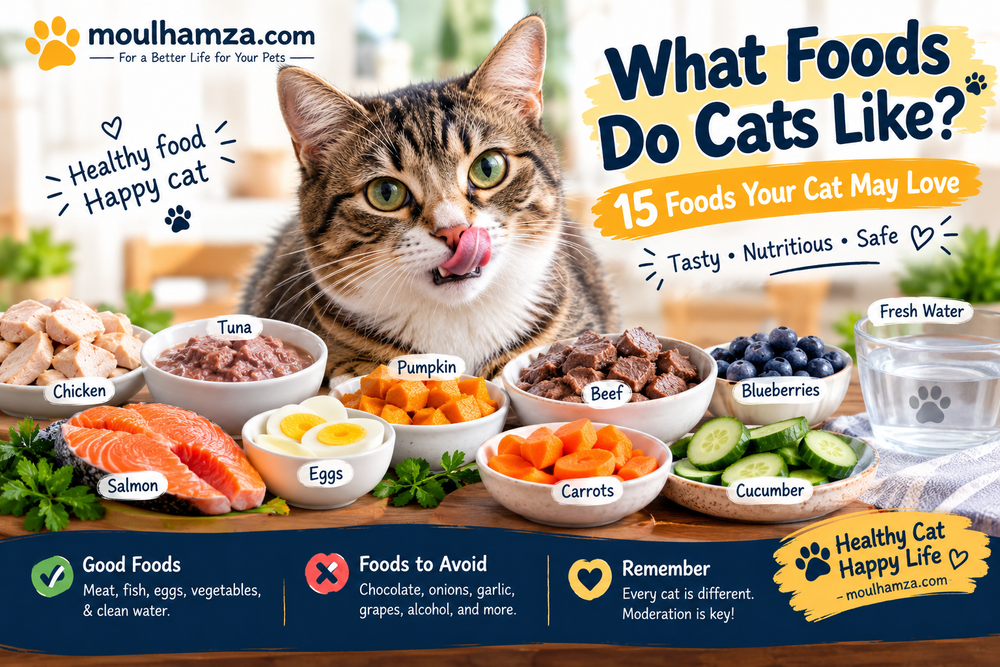
What Foods Do Cats Like? 15 Foods Your Cat May Love
Cats can be surprisingly selective when it comes to food. Some cats happily eat the same meal every day, while others quickly lose interest and prefer to explore different flavors and textures. If you have ever wondered, “What foods do cats like?”, the answer depends partly on the individual cat, but there are several foods that many cats find especially appealing.
Cats are obligate carnivores, which means their bodies are adapted to obtain important nutrients from animal-based foods. Their regular diet should therefore be based on a complete and balanced cat food appropriate for their age and health needs. However, some safe foods can be offered occasionally as treats.
Here are some foods that many cats enjoy.
1. Cooked Chicken
Chicken is one of the most popular foods among cats. Its smell and texture can be very attractive, especially when it is served warm and freshly prepared.
If you want to give your cat chicken, make sure it is completely cooked and plain. Remove all bones and avoid salt, spices, sauces, onions, and garlic. Small pieces of cooked chicken can make a useful occasional treat.
2. Cooked Turkey
Many cats also enjoy the taste of turkey. Plain, fully cooked turkey can be offered in small portions as an occasional treat.
Avoid processed turkey products that contain large amounts of salt, seasoning, or other ingredients that may not be appropriate for cats.
3. Cooked Fish
The smell of fish can be particularly attractive to cats. Some cats enjoy plain cooked fish such as salmon or other suitable varieties.
Fish should always be properly cooked and served without bones, sauces, or heavy seasoning. It should be an occasional treat rather than the foundation of a cat’s diet unless it is part of a nutritionally complete commercial diet.
4. Salmon
Salmon is another food that many cats find irresistible. Its strong aroma and soft texture can make it appealing even to picky eaters.
If you offer salmon, choose plain cooked salmon and remove all bones. Avoid smoked or heavily salted salmon because excessive salt and added ingredients are not appropriate for cats.
5. Tuna
Many cats seem to love tuna because of its strong smell and distinctive flavor. A small amount of plain tuna can be offered occasionally.
However, tuna intended for humans should not become a cat’s everyday meal because it does not provide everything a cat needs for complete nutrition. Treats should remain a small part of the overall diet.
6. Cooked Eggs
Some cats enjoy cooked eggs because of their soft texture and mild flavor. Eggs can provide protein, but they should be served fully cooked and plain.
Avoid adding butter, salt, spices, sauces, or other ingredients. A small portion is enough for an occasional treat.
7. Plain Pumpkin
Although cats are primarily meat eaters, some cats may accept plain pumpkin. It can be offered in a small amount as an occasional addition.
Use plain cooked pumpkin without sugar, spices, or other additives. If your cat has digestive problems, consult a veterinarian before changing its diet.
8. Cooked Carrots
Some cats enjoy soft, cooked carrots, although vegetables are not necessary for every cat.
If you offer carrots, cook them until they are soft and cut them into small, manageable pieces. Never add seasonings, butter, or sauces.
9. Small Pieces of Cucumber
A few cats enjoy the cool, crunchy texture of cucumber. If your cat likes it, small pieces can be offered occasionally.
There is no need to force vegetables on a cat. If your cat shows no interest, simply provide an appropriate cat treat instead.
10. Cooked Beef
Plain cooked beef can be appealing to cats because of its rich smell and meaty flavor.
Choose lean, fully cooked meat without sauces, onions, garlic, excessive salt, or spices. Cut it into small pieces that are easy for your cat to eat.
11. Cooked Lamb
Some cats enjoy lamb as an occasional treat. Like other meats, it should be fully cooked and served plain.
Avoid fatty preparations and heavily seasoned dishes. A small amount is sufficient.
12. Cat Treats
Commercial cat treats are often specifically designed to appeal to feline taste preferences. They can be useful for positive reinforcement or simply as an occasional reward.
Always follow the feeding instructions on the package and avoid giving excessive treats. Too many treats can contribute to unwanted weight gain.
13. Wet Cat Food
Many cats prefer wet food because of its strong aroma and soft texture. The higher moisture content can also be useful for cats that do not naturally drink much water.
If wet food is part of your cat’s diet, choose a product labeled as complete and balanced for cats and appropriate for the animal’s life stage.
14. Warm Food
Cats can sometimes be more interested in food when it has a pleasant aroma. Slightly warming wet cat food can make its smell stronger and potentially encourage a reluctant eater.
Never serve food that is hot. It should only be gently warmed and checked before being offered.
15. Fresh Water
Although water is not technically a food, it is one of the most important things your cat needs every day.
Cats should have access to clean, fresh water. Some cats prefer running water, so a properly maintained pet water fountain may encourage them to drink more.
Foods You Should Never Give Your Cat
Knowing what cats like is important, but knowing what they should avoid is even more important.
Do not intentionally feed cats foods such as chocolate, onions, garlic, alcohol, grapes, raisins, or products containing certain artificial sweeteners such as xylitol. Raw meat, raw eggs, and bones can also carry risks depending on how they are handled and prepared.
Milk is another common misconception. While some cats may enjoy milk, many adult cats have difficulty digesting lactose and may develop digestive upset after consuming dairy products.
If your cat accidentally eats something potentially toxic, contact a veterinarian or an appropriate animal poison service promptly rather than waiting for symptoms.
How Much Treat Food Should a Cat Eat?
Even when a cat loves a particular food, moderation is essential. Treats and additional foods should not replace a complete and balanced diet.
A cat’s nutritional needs depend on factors such as age, body condition, activity level, and overall health. Cats with allergies, kidney problems, diabetes, obesity, or other medical conditions may require a specific diet recommended by a veterinarian.
When introducing a new food, start with a very small amount and monitor your cat for digestive problems or other unusual reactions.
Final Thoughts
So, what foods do cats like? Many cats enjoy cooked chicken, turkey, fish, salmon, small amounts of tuna, eggs, and other plain animal-based foods. Some may also enjoy small amounts of certain vegetables, while others will completely ignore them.
The most important thing is to remember that every cat has its own preferences. A food that one cat loves may not interest another.
For a healthy and happy cat, focus on providing a complete and balanced diet, clean drinking water, appropriate portions, and occasional treats. When you are uncertain about whether a particular food is safe for your cat, consult a veterinarian before introducing it.
A little variety can make mealtime more interesting, but safe nutrition should always come before taste.