
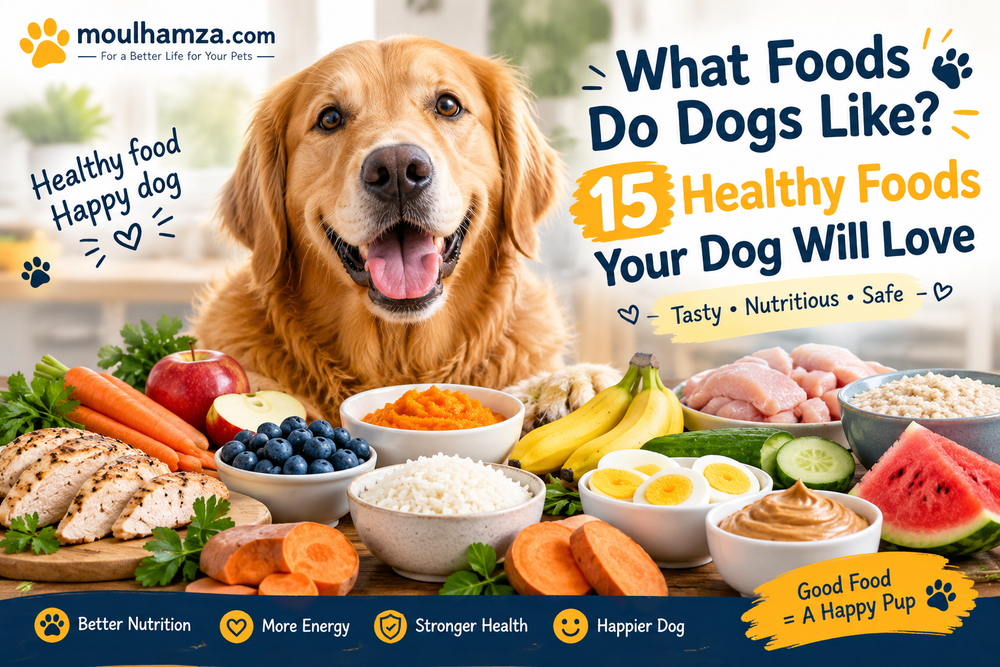
What Foods Do Dogs Like? 15 Healthy Foods Your Dog May Love
Dogs are known for their enthusiasm when it comes to food. Whether your dog is waiting beside its food bowl or watching you prepare a meal, it may seem interested in almost everything you eat. But while dogs can enjoy a variety of foods, not everything that tastes good to humans is safe for them.
So, what foods do dogs like? The answer can vary from one dog to another. However, many dogs enjoy certain healthy foods because of their taste, smell, and texture. When offered in appropriate portions, some of these foods can be useful as occasional treats or additions to a balanced diet.
Here are some foods that many dogs enjoy.
1. Cooked Chicken
Plain, cooked chicken is a popular choice for many dogs. It provides protein and has a strong aroma that can make it particularly appealing.
If you give chicken to your dog, make sure it is fully cooked and served without onions, garlic, spicy seasoning, or sauces. Remove all bones before serving because cooked bones can splinter and cause serious problems.
2. Carrots
Many dogs enjoy the crunchy texture of carrots. They can be served raw in appropriately sized pieces or lightly cooked.
Carrots are also relatively low in calories, making them a convenient occasional treat for dogs that enjoy crunchy snacks. Always cut food into a size appropriate for your dog’s breed and size.
3. Apples
Some dogs love the sweet and crunchy taste of apples. Small pieces of apple can be offered as an occasional treat.
However, remove the seeds and core before giving apple to your dog. The seeds should not be intentionally fed to dogs, and the core can also create a choking hazard.
4. Pumpkin
Plain pumpkin can be enjoyed by many dogs and is often used as an occasional addition to their meals.
Choose plain cooked pumpkin without added sugar, spices, or sweeteners. Avoid pumpkin products prepared with ingredients that are not appropriate for dogs.
5. Eggs
Many dogs enjoy cooked eggs. Eggs contain protein and can be offered occasionally as part of a varied diet.
If you give your dog eggs, serve them fully cooked and plain. Avoid adding butter, salt, spices, or other ingredients that may not be suitable for dogs.
6. Green Beans
Plain green beans can be a crunchy and enjoyable treat for some dogs. They can be served cooked or raw when prepared appropriately.
Avoid versions containing added salt, sauces, onions, or other potentially harmful ingredients.
7. Sweet Potatoes
Cooked sweet potatoes can be appealing to many dogs because of their soft texture and mild sweetness.
They should be served plain and cooked. Avoid giving dogs sweet potatoes covered in sugar, butter, or heavily seasoned ingredients.
8. Blueberries
Blueberries are small and naturally sweet, and some dogs enjoy them as an occasional treat.
Because they are small, they can also be convenient during training. However, treats should remain a small part of a dog’s overall diet.
9. Bananas
The naturally sweet flavor of bananas attracts many dogs. Small pieces can be given occasionally.
Bananas contain natural sugars, so moderation is important. They should be considered a treat rather than a replacement for a complete and balanced dog food.
10. Plain Cooked Turkey
Plain, fully cooked turkey can be enjoyed by many dogs. Like chicken, it can provide protein and may be useful as an occasional treat.
Remove bones and skin, and avoid turkey prepared with onions, garlic, excessive salt, rich sauces, or spicy seasonings.
11. Cucumber
Some dogs enjoy the refreshing crunch of cucumber. Small pieces can make a simple occasional snack.
As with any new food, introduce it gradually and watch your dog for any digestive problems.
12. Watermelon
Watermelon can be a refreshing treat, particularly during warm weather. If offered to a dog, remove the seeds and rind and provide only small pieces of the fruit.
Because watermelon contains a lot of water and natural sugar, it should be given in moderation.
13. Plain Rice
Plain, fully cooked rice is accepted by many dogs and can be easy for them to digest. It should be served without spices, sauces, onions, garlic, or excessive salt.
Rice should not replace a complete dog diet, but small amounts may be suitable as an occasional addition depending on the individual dog.
14. Plain Oatmeal
Some dogs enjoy plain cooked oatmeal. It can provide carbohydrates and fiber, but it should be prepared without sugar, chocolate, artificial sweeteners, or flavored additives.
Allow it to cool before offering a small amount to your dog.
15. Peanut Butter — Check the Ingredients Carefully
Some dogs absolutely love peanut butter, making it a popular treat for training and enrichment.
However, this is one food where checking the label is extremely important. Never give your dog peanut butter containing xylitol, an artificial sweetener that can be extremely dangerous to dogs.
Choose a simple product without xylitol, excessive salt, or added ingredients, and offer only a small amount.
Foods Dogs Should Never Eat
Knowing what dogs like is only half of responsible feeding. Dog owners should also know which foods can be dangerous.
Some foods that should not be intentionally given to dogs include chocolate, grapes and raisins, onions, garlic, alcohol, xylitol, and foods containing certain harmful ingredients.
Fatty, heavily seasoned, or very salty foods should also be avoided. If your dog accidentally eats something potentially toxic, contact a veterinarian or an appropriate animal poison service as soon as possible rather than waiting for symptoms to appear.
How Much Human Food Can a Dog Eat?
Even healthy foods should be treated as occasional additions rather than the main part of a dog’s diet. Dogs have specific nutritional requirements, and their regular meals should provide complete and balanced nutrition appropriate for their age, size, activity level, and health needs.
Treats and extras should generally make up only a small portion of the dog’s daily calorie intake. If your dog has allergies, diabetes, digestive problems, obesity, or another health condition, speak with a veterinarian before introducing new foods.
Final Thoughts
So, what foods do dogs like? Many dogs enjoy foods such as cooked chicken, carrots, apples, pumpkin, eggs, blueberries, bananas, and sweet potatoes. However, a food that one dog loves may not appeal to another.
The most important thing is not simply finding foods your dog enjoys, but making sure those foods are safe, appropriately prepared, and offered in moderation. A balanced diet should remain the foundation of your dog’s nutrition.
When introducing a new food, start with a small amount and observe your dog’s reaction. If you are unsure whether a particular food is suitable, asking a veterinarian is always the safest choice.
A healthy dog is not just a happy eater—it is a dog receiving the right nutrition, in the right amounts, every day.