

Things You Should Never Do to Cats: Common Mistakes Every Cat Owner Should Avoid
Cats are curious, independent, and intelligent animals, but they also have specific physical and emotional needs. Sometimes, things that seem harmless to humans can make a cat uncomfortable, frightened, or even put its health at risk. Whether you are a new cat owner or have lived with cats for years, understanding what you should never do to a cat is an important part of responsible pet care.
In this article, we will look at some common mistakes that cat owners should avoid and explain how you can create a safer, calmer, and happier environment for your feline companion.
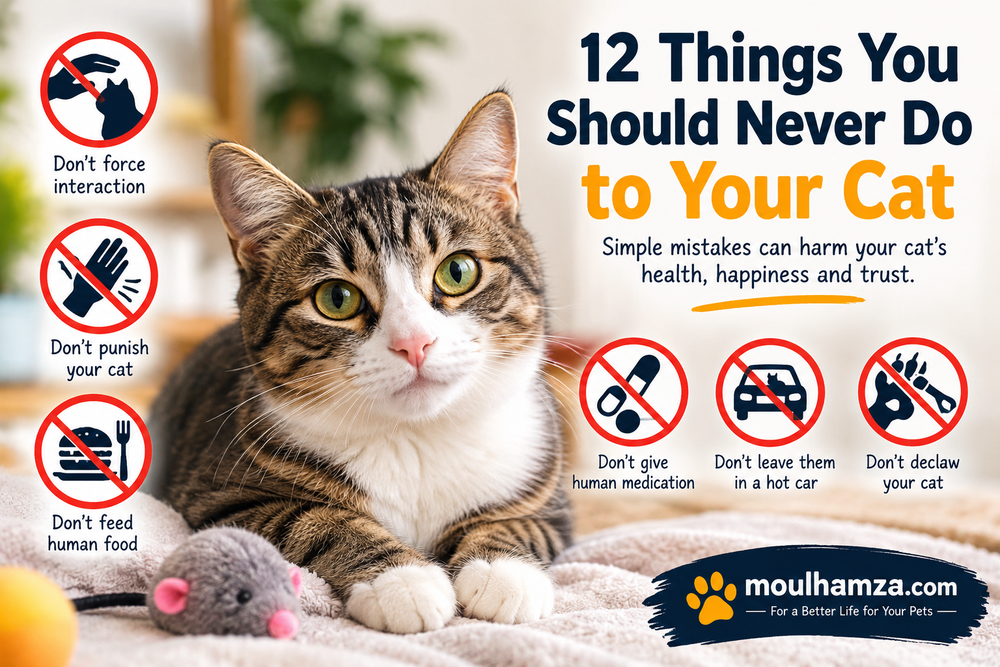
1. Never Force a Cat to Interact With You
One of the biggest mistakes people make is forcing a cat to be held, hugged, or petted when it does not want attention.
Cats communicate differently from humans. A cat may move away, flatten its ears, flick its tail, or try to hide when it feels uncomfortable. These are signs that it needs some space.
Instead of forcing interaction, allow your cat to approach you voluntarily. Sit quietly nearby and let the cat decide when it wants affection. Respecting its boundaries can help build trust and strengthen your relationship over time.
2. Do Not Punish Your Cat Physically
Physical punishment is never an appropriate way to correct a cat’s behavior. Hitting, kicking, grabbing, or deliberately frightening a cat can cause stress and may make the animal fearful of its owner.
If your cat scratches furniture, jumps on a table, or behaves in a way you do not like, try to understand why it is doing it. Positive reinforcement, environmental changes, and appropriate alternatives are generally much better approaches.
For example, if your cat scratches the sofa, provide a scratching post in a nearby location and encourage the cat to use it.
3. Never Ignore Changes in Behavior
Cats are often very good at hiding signs of illness or discomfort. A sudden change in behavior should therefore not always be dismissed as simple moodiness.
Changes such as hiding more than usual, refusing food, drinking significantly more water, becoming unusually aggressive, or suddenly avoiding the litter box may indicate that something is wrong.
If you notice a persistent or concerning change, contact a veterinarian. Early professional advice can be important when a cat develops a health problem.
4. Do Not Give Human Medication Without Veterinary Advice
Some medications that are commonly used by humans can be dangerous or even life-threatening to cats. Giving your cat medicine without professional guidance can therefore be extremely risky.
Never assume that a medication is safe simply because it is available without a prescription or because it helped another pet.
If your cat appears sick or injured, contact a veterinarian and follow their instructions. Keep human medications safely stored away from pets.
5. Never Feed Your Cat Only Human Food
Cats have nutritional requirements that are different from ours. Sharing small amounts of certain foods may sometimes be acceptable, but a cat should not depend on human food as its primary diet.
A balanced cat food appropriate for the animal’s age and individual needs is generally the safest foundation for its nutrition.
You should also be careful with foods that can be harmful to cats, including onions, garlic, chocolate, alcohol, and some other ingredients. If you are unsure whether a particular food is safe, ask a veterinarian before giving it to your cat.
6. Do Not Neglect the Litter Box
A dirty litter box can make cats uncomfortable and may cause them to avoid using it. Regular cleaning is an important part of maintaining a healthy and pleasant environment.
Scoop waste regularly and clean the litter box according to the type of litter you use. It is also useful to place the box somewhere quiet and easily accessible.
If a cat suddenly stops using the litter box, do not simply assume that it is being stubborn. Stress, environmental changes, or medical problems can sometimes be responsible.
7. Never Leave Dangerous Objects Within Reach
Cats are natural explorers. They may investigate objects that appear harmless but could cause injury.
Keep small objects, electrical cords, toxic substances, sharp items, and potentially dangerous household materials away from areas where your cat can reach them.
Plants are another consideration. Some plants can be toxic to cats, so research any plant before bringing it into a home where a cat lives.
A few minutes spent making your home safer can prevent many unnecessary accidents.
8. Do Not Ignore Your Cat’s Need for Mental Stimulation
Cats need more than food and a place to sleep. They also need opportunities to play, explore, scratch, climb, and express natural behaviors.
Without enough stimulation, some cats may become bored or develop unwanted behaviors.
Simple activities such as interactive toys, scratching posts, safe climbing areas, and short play sessions can make a significant difference. You do not need expensive equipment to keep a cat mentally active.
9. Never Leave a Cat in a Hot Car
A parked car can become dangerously hot very quickly, even when the weather outside does not initially seem extreme.
Never leave a cat alone inside a parked vehicle. Opening a window slightly does not make the situation reliably safe.
When transporting your cat, use a secure carrier and make sure the animal has adequate ventilation and a comfortable temperature.
10. Do Not Declaw a Cat Without Carefully Considering the Consequences
Declawing is very different from simply trimming a cat’s claws. It involves removing part of the cat’s toes and is a serious procedure.
Before considering any permanent procedure, discuss alternatives with a veterinarian. Regular nail trimming, scratching posts, and environmental modifications can often help manage scratching behavior without resorting to unnecessary interventions.
11. Never Let Your Cat Roam in Dangerous Areas Without Considering the Risks
Outdoor exploration can expose cats to traffic, fights with other animals, parasites, infectious diseases, and other hazards.
If you allow your cat to spend time outdoors, consider safer options such as supervised outdoor time, secure enclosures, or a properly fitted harness if the cat tolerates it.
Every cat and every environment is different, so owners should evaluate the risks around their home carefully.
12. Do Not Forget Regular Veterinary Care
Even a cat that appears perfectly healthy can benefit from regular veterinary checkups. Routine care allows professionals to monitor the animal’s general health and discuss preventive measures such as vaccinations, parasite control, dental care, and nutrition.
If your cat shows signs of illness, injury, difficulty breathing, persistent vomiting, severe lethargy, or another urgent symptom, seek veterinary care promptly.
Final Thoughts
Caring for a cat is not only about providing food, water, and a comfortable place to sleep. Responsible ownership also means understanding feline behavior, respecting boundaries, preventing avoidable dangers, and paying attention to changes in health.
Avoiding these common mistakes can help your cat feel safer and more comfortable while strengthening the bond between you. Every cat has its own personality, so take the time to learn what makes your companion feel secure.
The best approach is simple: respect your cat, protect its environment, provide appropriate care, and seek professional veterinary advice whenever you are unsure about its health or safety.