

Cat vs. Dog Ownership: What Is the Difference Between Raising Cats and Dogs?
Cats and dogs are among the most popular pets in the world, but caring for them is not the same. While both animals need food, affection, exercise, veterinary care, and a safe home, their personalities, daily routines, communication styles, and care requirements can be very different.
Understanding the differences between raising a cat and raising a dog can help you choose the pet that best matches your lifestyle. It can also help new pet owners provide better care for their animal.
1. Independence and Attention
One of the biggest differences between cats and dogs is their level of independence.
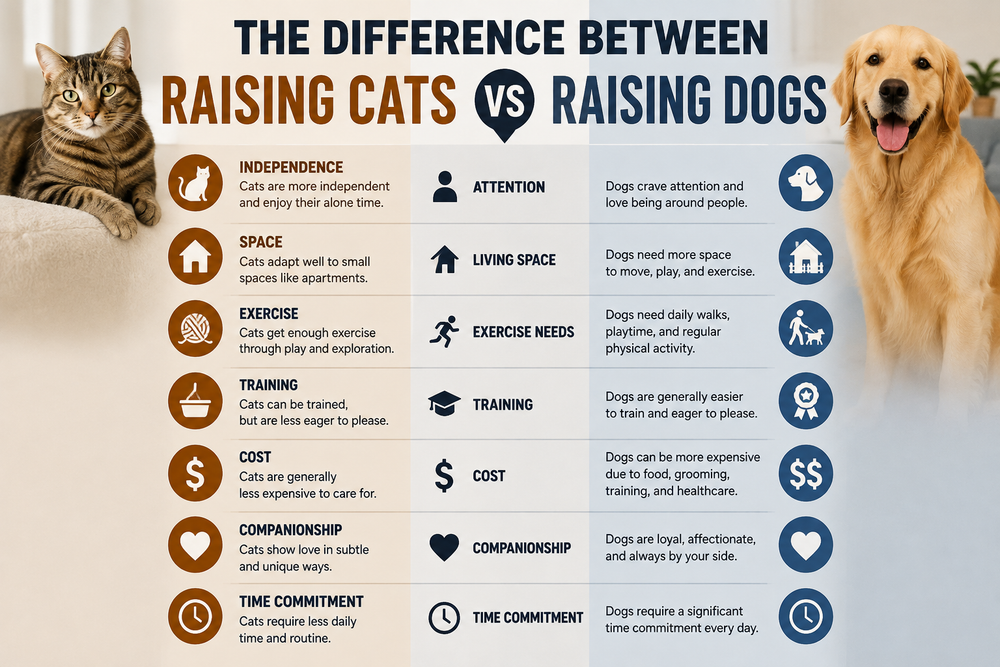
Cats are generally more independent animals. They can spend time alone and often entertain themselves by sleeping, exploring, playing with toys, or watching their surroundings. Although cats enjoy affection and companionship, many do not require constant attention throughout the day.
Dogs, on the other hand, are usually more socially dependent on their owners. Many dogs enjoy spending several hours with their families and may become bored or stressed when left alone for long periods. Dogs often require regular interaction, training, playtime, and outdoor activities.
This does not mean cats do not need attention or dogs cannot be independent. Every animal has its own personality.
2. Exercise Requirements
Exercise is another important difference.
Most dogs need regular physical activity. Depending on the breed, age, and health of the dog, this may include daily walks, running, playing fetch, training exercises, or other activities. Active dog breeds may require significantly more exercise than smaller or less energetic breeds.
Cats usually do not need to be taken outside for walks. Indoor cats can get physical and mental stimulation through interactive toys, scratching posts, climbing structures, and short play sessions.
However, cats still need exercise. Encouraging your cat to chase toys, climb, jump, and explore can help support a healthy lifestyle.
3. Training and Behavior
Dogs generally require more structured training than cats. Basic dog training can include teaching commands, leash walking, house training, socialization, and appropriate behavior around people and other animals.
Cats can also be trained, but their training often looks different. Owners can teach cats to use a litter box, respond to certain cues, use scratching posts, and participate in simple behaviors through positive reinforcement.
Cats may be less motivated to follow commands simply to please their owners. They tend to respond better when training is associated with something they find rewarding.
4. Toilet and Bathroom Care
Bathroom routines are also very different.
Cats usually use a litter box, which makes indoor toilet management relatively convenient. However, the litter box needs to be cleaned regularly to encourage good habits and maintain a hygienic environment.
Dogs generally need to be taken outside for bathroom breaks unless they have been trained to use an appropriate indoor system. Puppies may require frequent bathroom trips while they are learning.
For dog owners, this can mean planning daily walks and bathroom breaks around work, school, travel, and other responsibilities.
5. Space Requirements
Cats can often adapt well to apartments and smaller homes, provided they have enough enrichment and safe places to climb, rest, hide, and play.
Dogs can also live in apartments, but their needs depend heavily on their size, energy level, temperament, and exercise requirements. A large, energetic dog may need much more physical activity than a calm small dog.
Having a large home does not automatically mean that a pet will be happy. The quality of care, stimulation, companionship, and exercise is often more important than simply having a large amount of indoor space.
6. Grooming and Cleaning
Both cats and dogs require grooming, but the amount varies.
Cats spend a significant amount of time grooming themselves. Short-haired cats may require relatively little brushing, while long-haired breeds may need frequent grooming to reduce tangles and mats.
Dogs can have very different grooming needs depending on their coat. Some dogs require regular brushing, bathing, nail trimming, ear cleaning, or professional grooming.
Pet owners should consider grooming requirements before choosing a breed or animal.
7. Communication and Personality
Cats and dogs communicate in different ways.
A cat may communicate through body posture, tail movements, facial expressions, purring, meowing, hissing, and changes in behavior. Understanding feline body language can help owners recognize when a cat feels comfortable, frightened, stressed, or irritated.
Dogs communicate through body language, barking, whining, facial expressions, tail movements, posture, and behavior. Learning to recognize these signals can help owners understand their dog’s emotional state and respond appropriately.
Both species can form strong bonds with humans, but they may show affection differently.
8. Costs of Ownership
The cost of caring for a cat or dog depends on many factors, including size, age, breed, health, food requirements, grooming needs, and veterinary care.
Dogs can sometimes cost more because of their larger food requirements, grooming needs, training, boarding, walking services, and other expenses.
Cats also require ongoing expenses such as food, litter, veterinary examinations, vaccinations, parasite prevention, toys, scratching equipment, and other supplies.
Regardless of the animal, prospective owners should create a realistic budget before bringing a pet home.
9. Which Pet Is Better for You?
There is no universally better choice between a cat and a dog. The right pet depends on your lifestyle, available time, living environment, budget, and personal preferences.
A cat may be a good choice for someone who wants a companion that can be relatively independent and is comfortable living indoors. A dog may be a better match for someone who enjoys outdoor activities, regular walks, training, and a highly interactive relationship with a pet.
However, individual personalities matter. Some cats are extremely social, while some dogs are calm and independent. It is important to consider the individual animal rather than relying only on general stereotypes.
Final Thoughts
The difference between raising cats and raising dogs is mainly related to their natural behaviors, exercise needs, training, bathroom routines, social requirements, and daily care.
Cats generally offer a more independent style of companionship, while dogs often require more direct involvement from their owners. Both can bring companionship and enjoyment to a household when their physical, emotional, and behavioral needs are properly understood.
Before adopting either animal, take time to learn about its needs and make sure you can provide a safe, healthy, and loving environment. Responsible pet ownership is not about choosing the easier animal; it is about choosing a companion whose needs you are prepared to meet for its entire life.