
The Best Time to Feed Your Dog: A Practical Guide for Healthy Feeding Habits
Feeding your dog is about more than simply filling the food bowl. The timing of meals can play an important role in creating a healthy daily routine, supporting digestion, and helping your dog maintain a stable eating pattern. While there is no single feeding schedule that works perfectly for every dog, choosing consistent meal times can make everyday life easier for both you and your pet.
So, what is the ideal time to feed your dog? The answer depends on several factors, including your dog’s age, size, activity level, health needs, and daily routine. However, for many adult dogs, feeding them once in the morning and once in the evening is a practical and commonly used approach.
Why Feeding Time Matters
Dogs generally benefit from routine. When meals are offered at approximately the same times each day, your dog can become accustomed to a predictable schedule. This can make it easier to manage hunger, bathroom breaks, exercise, and bedtime.
A consistent feeding routine may also help owners notice changes in appetite. If your dog normally eats breakfast and dinner but suddenly refuses food, eats much less than usual, or shows an unusual increase in appetite, the change may be easier to recognize when you have an established schedule.
Regular meal times can also help prevent random snacking throughout the day. Giving treats occasionally is fine for most healthy dogs, but treats should not replace balanced meals or become an excessive part of the daily diet.
What Is the Best Time to Feed an Adult Dog?
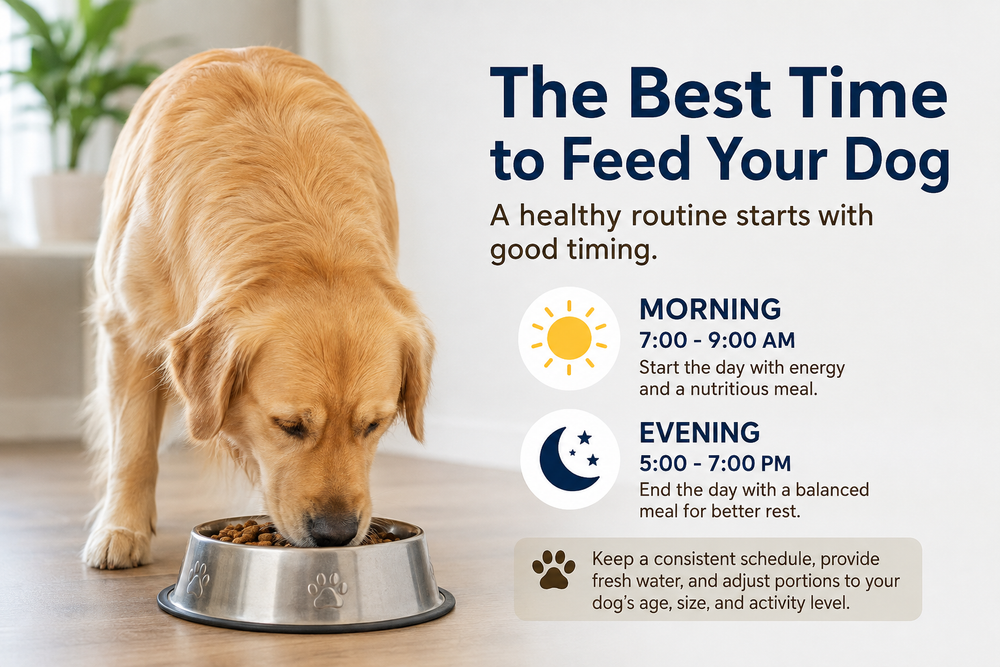
For many healthy adult dogs, two meals per day can work well. A simple schedule could be:
- Morning: Around 7:00–9:00 a.m.
- Evening: Around 5:00–7:00 p.m.
The exact times are not as important as consistency. If your schedule requires feeding your dog at 8:00 a.m. and 6:00 p.m., for example, that can also be perfectly reasonable.
It is usually helpful to leave enough time between meals rather than feeding both meals close together. A regular gap allows your dog to follow a predictable eating routine throughout the day.
Your dog’s exercise schedule should also be considered. For dogs that engage in intense physical activity, it may be sensible to avoid feeding a large meal immediately before vigorous exercise. Allowing an appropriate period between eating and strenuous activity can be especially important for larger dogs.
Should You Feed Your Dog Before or After a Walk?
The answer depends on the type and intensity of the activity.
A short, relaxed walk may not require major changes to your dog’s feeding schedule. However, vigorous running, intense play, or strenuous exercise immediately after a large meal may not be ideal.
Many owners prefer to walk their dogs before breakfast in the morning and then provide the meal afterward. In the evening, a calm walk before dinner can also be part of a useful routine.
For large or deep-chested breeds, discuss meal timing and exercise with your veterinarian because these dogs can have a higher risk of certain stomach problems, including gastric dilatation-volvulus (GDV).
Feeding Puppies: A Different Schedule
Puppies generally need a different feeding routine from adult dogs. Because they are growing rapidly, they often need more frequent meals throughout the day.
Very young puppies may need several small meals rather than two large meals. As they grow, the number of meals can gradually decrease depending on their age, breed, size, and nutritional needs.
If you have a puppy, it is important to follow feeding recommendations appropriate for its stage of development. A veterinarian can help you determine the right amount of food and feeding frequency for your particular puppy.
What About Senior Dogs?
Older dogs may continue eating twice a day, but their nutritional needs can change with age. Some senior dogs become less active and may require adjustments to their calorie intake.
Other older dogs may have dental problems, digestive issues, or medical conditions that affect how and when they should eat. If your senior dog suddenly changes its eating habits, it is a good idea to consult a veterinarian rather than changing the diet dramatically on your own.
Should Food Be Available All Day?
Some owners leave dry food available throughout the day, a practice known as free feeding. While this may work for certain dogs, it is not ideal for every pet.
Some dogs naturally control how much they eat, while others may continue eating whenever food is available. Free access to food can make it harder to monitor exactly how much your dog consumes and may contribute to unwanted weight gain in dogs that overeat.
Scheduled meals can make portion control easier and allow you to monitor your dog’s appetite more closely.
How Much Food Should Your Dog Eat?
Meal timing is only one part of healthy feeding. The amount of food your dog needs depends on factors such as body size, age, activity level, metabolism, and the calorie content of the food.
Start by checking the feeding instructions on your dog’s food packaging, but remember that these recommendations are general guidelines. Individual dogs can have very different calorie requirements.
Your veterinarian can help determine an appropriate daily amount, especially if your dog is overweight, underweight, highly active, pregnant, or has a medical condition.
A Simple Daily Feeding Routine
A practical routine for many adult dogs might look like this:
7:30 a.m. — Breakfast
Serve the recommended portion of a complete and balanced dog food. Fresh drinking water should always be available.
Morning — Activity and Walk
Allow your dog time for normal activity, while avoiding intense exercise immediately after a large meal.
6:00 p.m. — Dinner
Provide the second portion of the dog’s daily food allowance.
Evening — Relaxed Activity
A gentle walk or normal household activity can help your dog maintain a predictable daily routine.
The schedule can be adjusted according to your lifestyle. The most important factors are consistency, appropriate portions, and a diet suitable for your dog’s individual needs.
Final Thoughts
There is no universal clock time that is perfect for every dog. For many healthy adult dogs, however, two meals spaced throughout the day can provide a simple and manageable routine. Feeding at consistent times, monitoring portions, providing fresh water, and paying attention to your dog’s behavior can all contribute to good feeding habits.
Remember that puppies, senior dogs, large breeds, highly active dogs, and dogs with health conditions may require different feeding strategies. If you are unsure about the best feeding schedule for your pet, a veterinarian can provide advice based on your dog’s age, breed, weight, activity level, and overall health.
A good feeding routine does not need to be complicated. What matters most is choosing a schedule that suits your dog and your household, then maintaining it consistently.