
When Should You Take Your Cat to the Vet? Warning Signs Every Cat Owner Should Know
Cats are naturally good at hiding signs of illness. This can make it difficult for owners to know when a health problem requires professional attention. A cat may appear normal while quietly experiencing pain, discomfort, or another medical issue. Learning to recognize changes in your cat’s behavior, appetite, bathroom habits, and appearance can help you decide when it is time to contact a veterinarian.
Regular veterinary care is an important part of responsible cat ownership. However, there are also situations when your cat may need to be examined sooner than a routine appointment. Here are some important warning signs every cat owner should understand.
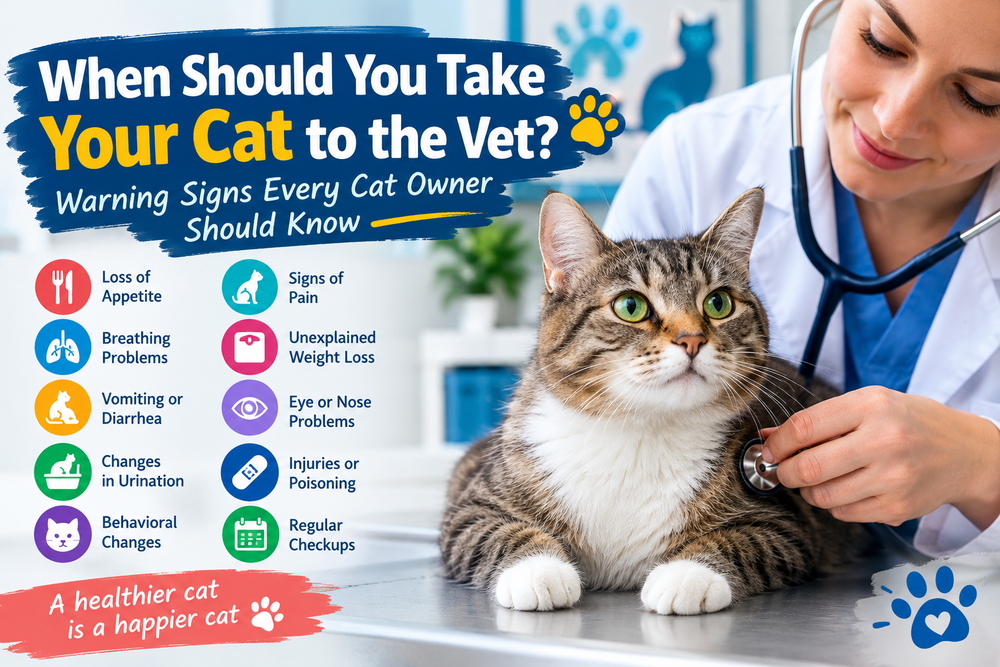
1. Your Cat Stops Eating or Drinking
A sudden loss of appetite should never be ignored, especially if your cat refuses food for an extended period. Cats can develop health complications when they do not eat, so a significant change in eating habits deserves veterinary advice.
Drinking much more or much less water than usual can also indicate that something has changed. Keep an eye on your cat’s water consumption and contact your veterinarian if the change is persistent or accompanied by other symptoms.
2. Difficulty Breathing
Breathing problems can be serious. If your cat is breathing with its mouth open, struggling to breathe, breathing unusually fast, or making abnormal respiratory sounds, seek veterinary care promptly.
Cats normally breathe quietly through their noses. Any obvious difficulty breathing should be treated as a potential emergency rather than something to monitor for several days at home.
3. Repeated Vomiting or Severe Diarrhea
Occasional vomiting can happen in cats, but repeated vomiting, persistent diarrhea, blood in vomit or stool, or vomiting combined with weakness can require professional evaluation.
Young kittens, senior cats, and cats with existing health problems may become dehydrated more quickly. If your cat cannot keep water down or seems extremely weak, contact a veterinarian as soon as possible.
4. Changes in Urination
Changes in litter box behavior are important clues about feline health. Watch for frequent trips to the litter box, straining to urinate, crying while urinating, urinating outside the litter box, or producing very little urine.
A cat that appears unable to urinate may have a potentially life-threatening urinary obstruction. This situation requires immediate veterinary attention, particularly in male cats.
5. Sudden Changes in Behavior
You know your cat’s normal personality better than anyone. If your normally social cat suddenly hides, becomes unusually aggressive, stops interacting with family members, or seems confused or extremely tired, something may be wrong.
Behavioral changes do not always mean a serious illness, but sudden or persistent changes should be discussed with a veterinarian, especially when they occur alongside physical symptoms.
6. Signs of Pain or Discomfort
Cats often hide pain, but there are subtle signs that owners can notice. Your cat may stop jumping onto furniture, walk differently, avoid being touched, remain in one position for long periods, groom less, or become unusually irritable.
Other possible signs include excessive vocalization, hiding, changes in sleeping habits, or a hunched posture. If you suspect that your cat is experiencing pain, professional evaluation can help identify the underlying cause.
7. Unexplained Weight Loss
Gradual weight loss can be difficult to notice, particularly if you do not regularly weigh your cat. However, unexplained weight loss can sometimes be associated with dental problems, digestive disorders, metabolic conditions, or other health issues.
If your cat is losing weight despite eating normally, or if the weight loss is accompanied by increased thirst, increased urination, vomiting, or changes in behavior, schedule a veterinary examination.
8. Eye or Nose Problems
Red, swollen, cloudy, or painful-looking eyes should receive veterinary attention. Excessive discharge, squinting, or keeping one eye closed can also indicate a problem.
Similarly, persistent nasal discharge, frequent sneezing, congestion, or difficulty breathing should not be ignored. Eye problems in particular can sometimes worsen quickly, so early evaluation is important.
9. Injuries, Accidents, or Possible Poisoning
If your cat has been hit by a vehicle, fallen from a significant height, been bitten by another animal, or suffered another serious injury, contact a veterinarian even if the cat initially appears okay. Some internal injuries may not be immediately obvious.
Possible poisoning should also be treated seriously. If you believe your cat has eaten or contacted a potentially toxic substance, seek professional veterinary advice immediately and avoid giving home remedies unless specifically instructed by a veterinarian.
10. Regular Veterinary Checkups Still Matter
You should not wait until your cat becomes visibly sick before visiting the veterinarian. Routine checkups allow a professional to monitor your cat’s weight, teeth, overall condition, vaccinations, parasite prevention, and other aspects of preventive care.
The ideal frequency of veterinary visits can vary depending on your cat’s age, health, lifestyle, and individual needs. Kittens, senior cats, and cats with chronic health conditions may require more frequent monitoring.
Final Thoughts
Knowing when to take your cat to the veterinarian can make a major difference in maintaining good feline health. Sudden changes in appetite, drinking, urination, breathing, behavior, weight, or mobility should be taken seriously.
Most importantly, trust your observations. If your cat simply does not seem like itself and the change persists, contacting a veterinarian is often the safest choice. Never attempt to diagnose or treat a potentially serious condition based solely on information found online.
Your veterinarian can examine your cat, determine what may be causing the symptoms, and recommend appropriate treatment or monitoring. Paying attention to early warning signs and maintaining regular veterinary checkups are two of the best ways to support your cat’s health and well-being throughout its life.